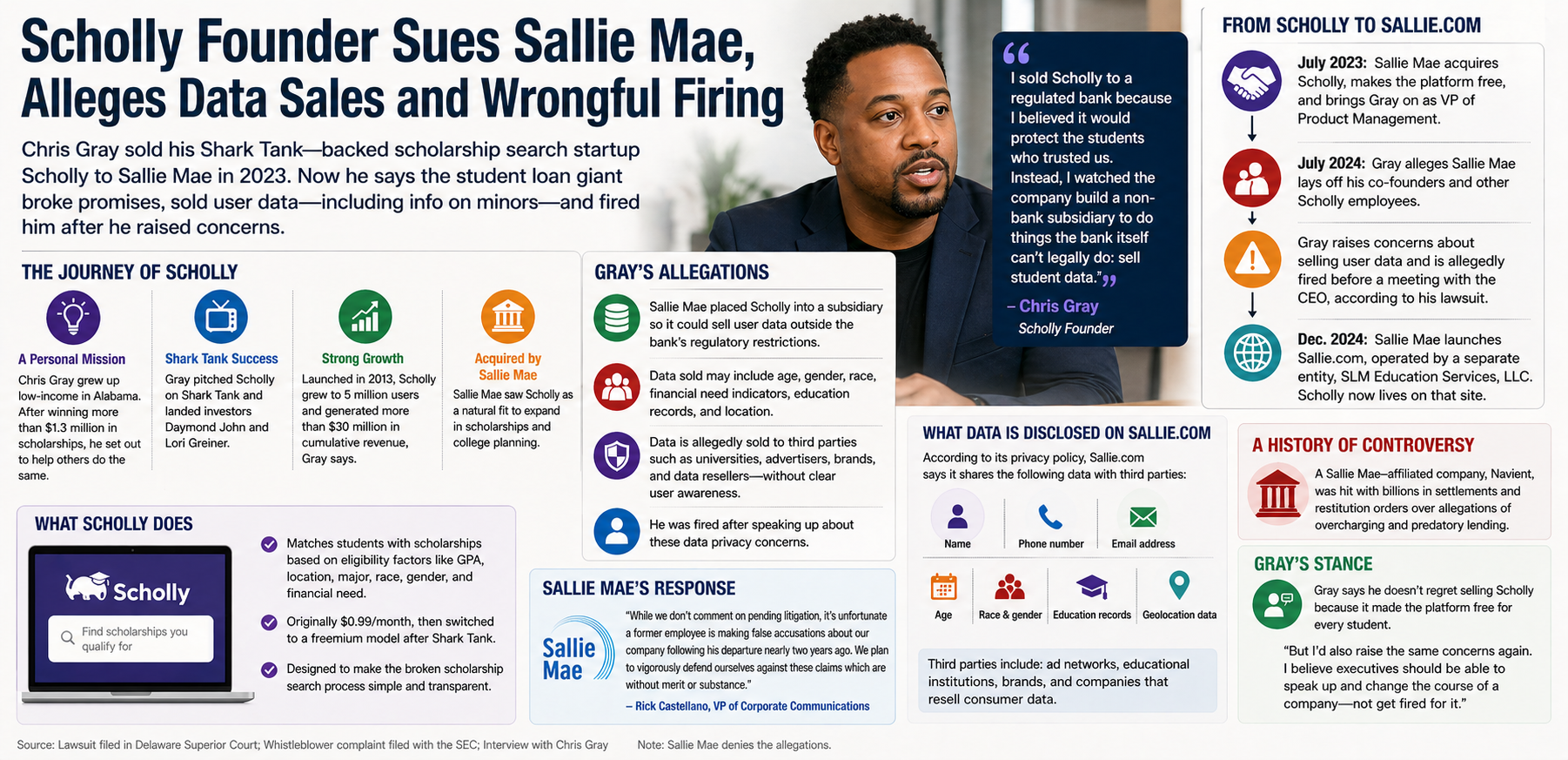
After selling his scholarship platform Scholly to Sallie Mae in 2023, founder Chris Gray is now taking legal action against the student loan company. He claims he was wrongfully dismissed and alleges the company is improperly selling user data collected through the app—including information tied to minors—without clear user consent.
From Mission-Driven Startup to Acquisition
Gray launched Scholly about a decade ago to simplify how students find scholarships. The idea gained national attention after appearing on Shark Tank, where investors Daymond John and Lori Greiner backed the company. Over time, Scholly grew to millions of users and generated significant revenue, eventually leading to its acquisition by Sallie Mae.
Expectations After the Deal
Following the sale, Gray joined Sallie Mae as a vice president and expected to expand Scholly’s reach while making it free for users. He also believed that, as a regulated financial institution, Sallie Mae would be restricted from sharing or selling sensitive customer data.
Allegations of Data Misuse
In his lawsuit and a whistleblower complaint filed with the SEC, Gray claims Sallie Mae cut key staff—including his co-founders—and later reversed earlier assurances about data privacy. He alleges the company structured operations through a separate subsidiary that could sell user data, including details such as age, race, gender, and financial background, to third parties like advertisers and universities.
Claims of Retaliation
Gray says he raised concerns internally about how user data was being handled. According to his filing, he was terminated roughly a year after the acquisition, just before he planned to escalate those concerns to senior leadership. He is now seeking compensation, damages, and legal fees.
Sallie Mae’s Response
Sallie Mae has rejected the accusations, calling them baseless. A company spokesperson stated they intend to defend against the claims but declined to address specific details or questions regarding data practices.
Background: A Founder’s Journey
Growing up in Birmingham, Alabama, Gray faced financial barriers to higher education. After personally securing over $1.3 million in scholarships, he built Scholly to help others navigate the same challenges. The platform used an algorithm based on eligibility factors like GPA, location, and financial need to match students with opportunities.
Growth and Success of Scholly
Launched in 2013, Scholly initially charged a small subscription fee before moving to a freemium model. It eventually reached around 5 million users and generated more than $30 million in revenue, according to Gray.
Disputed Business Changes
Gray’s concerns intensified after layoffs in 2024 and discussions he claims to have heard about monetizing user data. Around the same time, a new platform called Sallie.com launched, operating under a different entity. Gray argues this structure allows data-sharing practices that would not be permitted under traditional banking regulations.
Concerns Over Data Collection and Use
According to publicly available policies, Sallie.com shares various types of personal information—including contact details, demographic data, and location—with external partners such as advertisers and educational institutions. Gray argues users may not fully understand how their data is being used, especially given similarities between Sallie.com and the main Sallie Mae website.
Broader Implications
The lawsuit also raises questions about a related initiative called Backpack Media, which markets access to younger audiences using education-related data. Gray claims this may rely on Scholly user information, though the company has not confirmed those details.
Industry Context and Past Controversies
The case also draws attention to past issues involving companies linked to Sallie Mae, including Navient, which has faced legal actions and major settlements over lending practices.
Gray’s Perspective Moving Forward
Despite the dispute, Gray says he doesn’t regret selling Scholly, noting it helped make the service free for students. However, he maintains that raising concerns about data practices was necessary and believes business leaders should be able to speak up without facing retaliation.